

By Hadia Safeer Choudhry
As China enters the 15th Five-Year Plan period (2026–2030), the focus has shifted from declaring victory over absolute poverty in 2020 to the harder, quieter work of consolidation and expansion. After lifting nearly 100 million rural residents out of extreme poverty, the challenge now lies in preventing relapse, raising incomes sustainably, and narrowing the persistent urban-rural divide. The recently released 2026 No. 1 Central Document outlines a pragmatic path: regular and targeted assistance, stronger industrial support for farmers, and steady progress toward modern living conditions in the countryside. This transition from intensive campaign to institutionalised support reflects a recognition that ending absolute poverty was a milestone, not an endpoint.
The measures emphasise continuity with adjustment. A dynamic monitoring system tracks households at risk of falling back into hardship due to illness, job loss, natural disasters, or other shocks. When early warning signs appear—such as unusually high medical costs or school dropouts—local officials are alerted for timely intervention. This mechanism builds on the earlier targeted poverty-alleviation approach but operates with less urgency and greater standardisation. Tiered and differentiated support aims to match assistance to specific needs rather than applying uniform solutions across diverse regions.
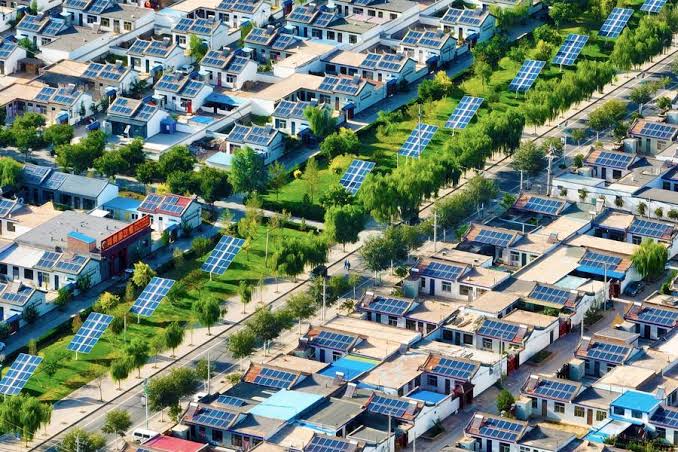
Industrial and employment assistance receive particular attention. The plan encourages development of county-level industries that can provide stable income for rural residents, whether through specialty agriculture, agro-processing, rural tourism, or small manufacturing. Efforts to stabilise employment for migrant workers and expand rural consumption seek to give former poverty-alleviated households a firmer economic footing. Infrastructure gaps are being addressed to improve connectivity, while investments in education and healthcare aim to strengthen human capital and prevent intergenerational transmission of disadvantage. The overarching goal is to ensure rural areas gradually acquire modern living conditions without disrupting the social fabric of villages.
These steps occur against a backdrop of broader rural revitalisation, which integrates poverty consolidation with agricultural modernisation and food security priorities. Policymakers appear conscious of the need for balance: pushing productivity while supporting those still catching up. Fiscal support continues, but the emphasis is shifting toward incentivising self-reliance and local initiative. In practice, this means pairing safety nets with opportunities work-relief projects, skills training, and market linkages for small farmers.
Addressing Scepticism and Narratives
Western media coverage of China’s poverty reduction efforts has often carried a sceptical tone, sometimes questioning the official statistics or highlighting individual cases of difficulty to cast doubt on the overall achievement. Articles have appeared suggesting that poverty was not truly eradicated, that figures were inflated, or that gains remain fragile and reversible. Some pieces focus on remote villages where challenges persist, using them to imply systemic failure or unsustainability.Such reporting is not without basis in the real complexities of rural life. Large countries inevitably contain uneven outcomes; pockets of hardship remain even after absolute poverty thresholds are crossed. Yet the persistent framing sometimes veers into selective narrative. Dramatic headlines questioning whether China “really” ended poverty often rely on anecdotal stories or anonymous sources while downplaying verifiable improvements: widespread rural road construction, near-universal basic medical insurance coverage in low-income groups, expanded electricity and digital access, and measurable rises in rural disposable incomes. Dynamic monitoring data, while imperfect, provides a mechanism for ongoing adjustment rather than a static claim of perfection. International observers, including organisations that track global poverty trends, have acknowledged the historic scale of China’s reduction in extreme poverty over four decades, even when applying stricter international benchmarks.
Critics occasionally argue that the effort was “expensive” or reliant on top-down mobilisation that other countries could not replicate. Scale does bring costs, and China’s administrative capacity and domestic market size enabled resource mobilisation on a level few nations can match. But the core approach—identifying specific obstacles at the household level, investing in infrastructure and skills, and linking poor areas to broader economic growth contains practical elements worth examining on their merits, not through an ideological lens. The current consolidation phase itself serves as a partial response to sustainability concerns. By moving from campaign-style intervention to regularised assistance mechanisms, authorities signal awareness that gains require ongoing effort. Preventing large-scale relapse is explicitly prioritised in the 15th Five-Year Plan documents. Emphasis on industrial development and farmer income growth aims to create endogenous drivers rather than perpetual external support. These adjustments suggest a learning process: refine what worked, correct weaknesses, and adapt to new realities such as demographic change and climate pressures.
Practical Lessons Amid Global Slowing Progress
For developing countries, including Pakistan, where rural poverty remains a pressing issue across diverse terrains, China’s experience offers material for reflection rather than prescription. The combination of sustained political priority, data-informed targeting, and integration of poverty work with overall economic strategy produced results on a massive scale. The current phase highlights the importance of transition planning: bridging from emergency-style poverty relief to longer-term rural development policies that emphasise resilience and opportunity.
Challenges persist everywhere. No country has eliminated relative poverty or fully insulated rural populations from shocks. Climate vulnerability, market fluctuations, and health risks continue to test even advanced systems. China’s approach in the 15th Plan period dynamic monitoring, layered support, and focus on county-level industries—attempts to address these through institutional embedding rather than one-off projects.
Ultimately, the test of any poverty strategy lies in lived outcomes over time: whether families have reliable income sources, access to basic services, and reasonable prospects for their children. China’s shift toward regularised assistance and rural revitalisation during 2026–2030 represents an attempt to meet that test through persistence and adaptation. For observers in the Global South, the value lies less in ideological endorsement or rejection than in extracting actionable insights precision targeting, infrastructure as a foundation, and aligning local economies with national growth while tailoring them to domestic institutions, land systems, and political realities.
Poverty alleviation on a national scale is inherently messy and incremental. China’s record, both in the initial eradication drive and the current consolidation efforts, demonstrates that large reductions in extreme hardship are possible with focused, sustained policy. The 15th Five-Year Plan period will reveal how effectively those gains can be secured and broadened. In a world where progress against poverty has slowed, such experiments deserve careful, balanced attention rather than reflexive dismissal.
About the Author

Hadia Safeer Choudhry is an International Relations scholar with academic expertise in sustainable development, energy security, international political economy, and strategic communication. Her research and writings examine international affairs, gender discourse, and emerging global developments. She can be reached at hadisafeer74@gmail.com
