

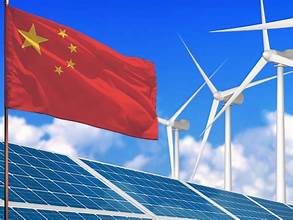
In the global race to combat climate change, no country holds as much sway as China. The sheer scale of its economy, population, and industrial base means that its choices reverberate far beyond its borders, shaping global markets and influencing international climate negotiations. In 2024, China installed more solar and wind power capacity than the rest of the world combined—a feat that cements its role as the undisputed leader in renewable energy. With an overwhelming share of clean technology manufacturing and exports, China is no longer just participating in the energy transition; it is shaping it. Yet beneath this remarkable progress lies a paradox that could determine the world’s climate future: China’s simultaneous reliance on coal.
China’s renewable energy surge is nothing short of historic. Vast solar farms now stretch across deserts in Inner Mongolia and Xinjiang, while offshore wind projects along the eastern seaboard harness the power of the seas. Advances in battery storage and grid infrastructure are improving the reliability of renewables, making them an increasingly viable backbone of the country’s energy system. By some estimates, China now produces more than 80% of the world’s solar panels and a majority of its wind turbines and batteries. This dominance is not accidental—it reflects decades of strategic investment, state subsidies, and an industrial policy designed to place China at the forefront of the clean energy revolution.
For developing countries seeking affordable clean technology, China has become the indispensable partner. From Africa to Latin America, Chinese solar panels and wind turbines are lighting homes, powering industries, and helping governments transition away from costly fossil fuel imports. The Belt and Road Initiative (BRI), once criticized for financing coal plants and locking nations into carbon-heavy infrastructure, is increasingly being recalibrated toward green investments. In countries like Pakistan, Kenya, and Brazil, Chinese firms are building solar parks, hydroelectric dams, and wind corridors that are reshaping national energy landscapes. In many ways, China is leading where others hesitate, proving that industrial might and climate responsibility can converge.
However, this success story is shadowed by contradictions. Despite its extraordinary green achievements, China remains the world’s largest consumer of coal. Even as it builds record-breaking solar and wind farms, it continues to approve new coal plants to meet rising electricity demand. This dual strategy reflects a deeper dilemma: how to balance decarbonization with the immediate needs of a vast population and a rapidly developing economy. Energy security remains a central concern for Beijing, and coal—abundant, reliable, and domestically available—offers stability in a way intermittent renewables and imported natural gas cannot yet guarantee.
This reliance on coal, however, undermines China’s credibility as a climate leader. Critics argue that every new coal plant built today risks becoming a stranded asset tomorrow, locking in high-carbon infrastructure at precisely the moment when the world must rapidly phase it out. Can the world’s top emitter truly drive the global clean energy revolution while continuing to build the very infrastructure that fuels the climate crisis? The question is not just about China’s domestic policy but about the global trajectory of emissions.
The answer may lie in political will and policy ambition. China has long used its five-year plans as roadmaps for economic and industrial transformation. All eyes are now on its upcoming plan, which will signal whether Beijing is prepared to accelerate its coal phaseout and double down on clean energy. International expectations are particularly high ahead of COP30, where China’s commitments could set the tone for global negotiations. If Beijing strengthens its pledge to cap coal consumption, scales up investment in carbon capture and storage, and sets more aggressive climate targets, it could alter the trajectory of global emissions. With both the industrial capacity and geopolitical leverage to lead, China has the potential to redefine energy security in terms of resilience, innovation, and sustainability rather than fossil dependence.
Beyond domestic policy, China’s green rise is reshaping geopolitics. By controlling the lion’s share of supply chains for solar panels, wind turbines, and electric vehicle batteries, China has positioned itself as the central hub of the global clean energy economy. This dominance brings both opportunities and risks. For countries in the Global South, China’s role as a provider of affordable technology offers a path to leapfrog fossil fuel dependency. Yet it also raises concerns about dependency on a single supplier and the vulnerability of global supply chains to geopolitical tensions. The United States and European Union, wary of this imbalance, are investing heavily in reshoring and diversifying their clean energy manufacturing. The competition between China and the West is no longer confined to semiconductors or rare earths—it extends to the heart of the energy transition itself.
Another dimension of China’s paradox lies in the social and environmental costs of its green expansion. While solar panels and wind turbines symbolize clean energy, their production is resource-intensive, requiring significant inputs of rare earth minerals and metals. Much of this mining takes place in regions with fragile ecosystems or under poor labor conditions. Questions of environmental justice—both within China and abroad—will increasingly come to the forefront as the clean energy race intensifies. Can China lead a green transition that is not only fast and efficient but also just and equitable?
At the same time, China’s leadership opens the door to unprecedented global cooperation. Climate change is the quintessential transnational challenge, one that no single country can solve alone. As the largest emitter, China’s actions are indispensable; but as the largest investor in clean energy, its contributions are equally indispensable. Partnerships with other major economies—whether in joint research on carbon capture, cooperative financing for green infrastructure, or harmonized carbon standards—could amplify progress. The paradox of competition and cooperation will define the coming decades of climate diplomacy.
For the world, China’s rise as a green superpower offers both hope and urgency. Hope—because the technologies and capacities necessary to avert climate catastrophe are expanding at unprecedented speed. Solar panels are cheaper than ever, wind turbines are more powerful, and electric vehicles are moving into the mainstream, in no small part because of Chinese scale and efficiency. Urgency—because contradictions in policy threaten to undermine progress. Every year that new coal plants come online, the window to meet the Paris Agreement’s 1.5°C target narrows.
Ultimately, China’s choices in the coming decade will reverberate across the planet. If it embraces a bold, coal-free pathway, it could inspire a new era of climate leadership, setting the standard for how industrial powers reconcile growth with sustainability. If it clings to fossil fuels, it risks squandering its green gains and dragging the world further off course. The stakes could not be higher.
China stands at a crossroads—between old energy and new, between short-term security and long-term survival. The promise is immense, but so is the paradox. The path Beijing chooses will not only determine its domestic prosperity but also decide whether the world can still bend the curve of climate change before it is too late.
About Author
Malik Tahoor Ahmed is a YOUNGO Reporter at Herald Star, representing the youth constituency to the UNFCCC. He focuses on youth-led climate initiatives, sustainability, and bridging policy with grassroots action.
