

By Qaiser Nawab, Chairman BRISD
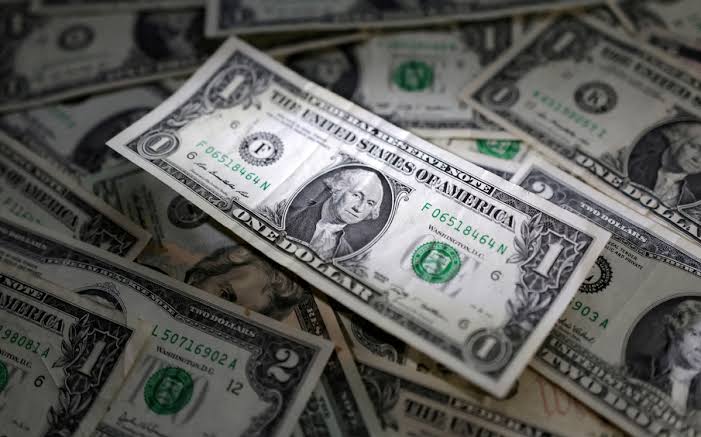
Recent data from the International Monetary Fund has offered a revealing snapshot of how the world’s financial architecture is quietly evolving. Global foreign exchange reserves held by central banks climbed 6.5 percent in 2025 to a record $13.1 trillion — the highest level since the IMF began tracking the figures in 1995. Yet within that impressive total lies a subtle but unmistakable shift: the US dollar’s share slipped from 58.52 percent in 2024 to 56.77 percent, its lowest point on record. For the 12th quarter running, the dollar has stayed below the 60 percent threshold. Compared with its 72 percent peak in 2001, the currency has shed more than 15 percentage points of its dominance. Between 2020 and early 2026 alone, central banks are estimated to have trimmed roughly $3.2 trillion in dollar-denominated holdings.This is not a sudden collapse but a measured recalibration. For decades, the dollar has been the undisputed anchor of the global monetary order, prized for its liquidity, stability, and universal acceptance. Today, however, a growing number of nations are seeking to reduce their exposure without discarding the dollar entirely. The process, often called de-dollarization, is multidimensional, gradual, and driven as much by pragmatism as by politics.
Analysts trace the erosion of the dollar’s reserve status largely to decisions made in Washington itself. The introduction of reciprocal tariffs in April 2025 triggered an unusual triple decline in US equities, bonds, and the currency. The dollar index dropped 9.4 percent over the year — its worst performance in eight years — while American public debt crossed $39 trillion and kept rising. Repeated use of financial sanctions and unconventional trade measures, observers note, has had the unintended effect of reminding governments everywhere that reliance on a single currency carries risks.
The BRICS grouping — Brazil, Russia, India, China, and South Africa, now expanded — has moved to concrete mechanisms.China’s Cross-Border Interbank Payment System (CIPS) offers a compelling case study. By the end of 2025, the platform reached more than 190 countries and regions, with transaction volumes rising 42.6 percent year-on-year. The share of cross-border renminbi business routed through SWIFT fell to just 30 percent. In February 2026, CIPS received a major upgrade, broadening its scope to handle offshore renminbi and foreign-currency payments and removing earlier restrictions for financial institutions. The system is steadily positioning itself as a versatile, multi-currency settlement network rather than a rival to SWIFT.
India, as BRICS chair in 2026, has floated an ambitious complementary idea: a “BRICS digital currency connectivity” platform. Using blockchain technology, the proposal aims to link member states’ national payment systems directly, enabling faster, cheaper transactions in local currencies. The goal is not confrontation but efficiency — lowering costs for traders and giving smaller economies a genuine choice.Nowhere is the shift more visible than in energy markets, once the bedrock of dollar supremacy. The 50-year petrodollar pact between the United States and Saudi Arabia expired in June 2024 without renewal. Riyadh has since adopted a multi-currency approach for oil sales, accepting renminbi, euros, and yen alongside dollars. A February 2025 memorandum of understanding between Saudi Arabia, the United Arab Emirates, Brazil, China, and South Africa launched a pilot cross-border settlement system based on a basket of commodities. By March 2026, 41 percent of Saudi oil exports to China were settled in renminbi — the first time it surpassed the dollar in a single month. For Saudi Aramco, the figure reached 45 percent. Meanwhile, more than 90 percent of Russia’s oil and gas shipments to China are now denominated in renminbi. Shanghai’s crude oil futures contract has solidified its place as the world’s third-largest, giving Asia-Pacific buyers a credible pricing benchmark independent of Western exchanges.
Running parallel to these payment innovations is a resurgence of gold. According to the World Gold Council, central banks have bought roughly 1,000 tons of the metal each year for the past four years. In 2025 alone, gold prices surged 65 percent, the largest annual gain since 1980. By early April 2026, spot prices had added another 8.3 percent. Global official gold reserves now exceed euro holdings and rank as the second-largest reserve asset after the dollar. Their share in central-bank portfolios climbed to 28.9 percent by the third quarter of 2025. Net purchases in 2025 totalled 863 tons, pushing aggregate holdings above 36,520 tons.
The international monetary system is moving, slowly but visibly, from a unipolar arrangement centred on the dollar toward a more balanced, diversified framework. This is not the end of the dollar — far from it — but the beginning of a world in which no single currency enjoys automatic supremacy. Diversification of reserves, promotion of local-currency trade settlement, innovation in cross-border payments, and reform of global financial governance have become shared priorities across continents.
About the Author:

Qaiser Nawab is Chairman of the Belt and Road Initiative for Sustainable Development (BRISD), an international platform focused on fostering cooperation and innovation across Asia, Africa, and Latin America. He can be reached at qaisernawab098@gmail.com
