

By Qaiser Nawab, Chairman BRISD
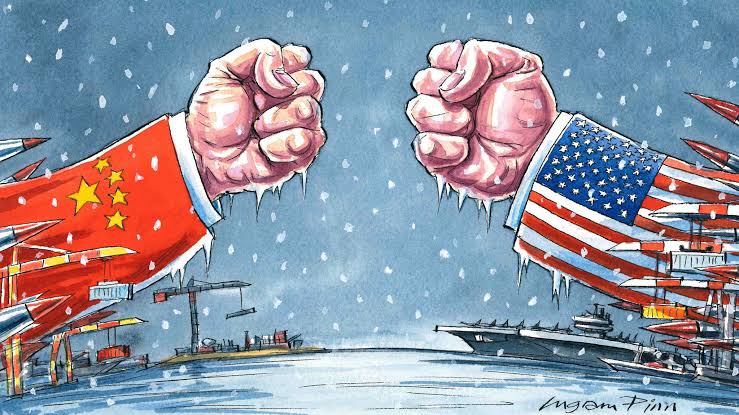
In the complex landscape of 21st-century geopolitics, few relationships carry more weight than that between China and the United States. After years of tariffs, technology controls, and mounting strategic distrust, the recent Beijing summit between President Xi Jinping and President Donald Trump has introduced a measured and forward-looking concept: the building of a constructive China-U.S. relationship of strategic stability. This approach does not ignore the deep differences or pretend that the relationship can rewind to earlier decades of easy engagement. Instead, it seeks to establish a more resilient framework — one where competition is bounded, differences are handled responsibly, and cooperation is pursued in areas of shared consequence.
This evolving narrative comes at an important juncture. Global growth remains fragile, supply chains are still adjusting to fragmentation pressures, and multiple regional crises demand careful management. For countries like Pakistan, which maintain strong partnerships with both nations, a more stable China-U.S. dynamic offers the possibility of reduced great-power pressure and greater room for balanced engagement.
The Beijing meeting stood out for its duration and tone. Nearly nine hours of discussions, spanning formal sessions and more informal settings, allowed both leaders to address core concerns directly. The resulting emphasis on “positive, healthy, consistent, and lasting stability” reflects a shared recognition that unmanaged rivalry carries risks too high for either side — or the world — to accept lightly.
Economic Progress as a Stabilising Force
A key test of this strategic stability lies in the economic and trade domain, where both sides have recorded some promising early outcomes. The agreement to establish a Trade Council and an Investment Council is particularly noteworthy. These new mechanisms aim to create regular, structured channels for addressing concerns, negotiating reciprocal tariff reductions, and resolving market access issues in a more predictable manner.
Initial steps include progress on non-tariff barriers for agricultural products. The U.S. side has agreed to work on long-standing Chinese concerns such as automatic detention of dairy and aquatic products, bonsai plant exports, and recognition of disease-free zones. China, in turn, will address U.S. priorities regarding beef facility registration and poultry exports. Both sides have also reached arrangements on aircraft purchases and engine supply commitments, while committing to expand two-way trade through targeted reciprocal tariff adjustments.
These developments are grounded in pragmatism rather than optimism. Businesses on both sides have repeatedly shown they prefer predictability over perpetual uncertainty. By focusing on mutual benefit and implementation, the economic teams are now working to finalise details and turn consensus into reality. If sustained, such efforts can help restore confidence, support jobs in both countries, and contribute to steadier global economic conditions.
People, Guardrails, and Broader Cooperation
Strategic stability requires more than trade deals. It needs reliable communication channels and efforts to prevent competition from escalating into a crisis. The summit reaffirmed the importance of frequent high-level contact, military dialogues, and crisis management protocols. On sensitive issues, both sides restated their positions while stressing careful management to protect the overall relationship.
Equally significant is the attention given to people-to-people exchanges. President Xi highlighted that the future of China-U.S. relations rests with the people, especially the younger generation. China’s commitment to invite 50,000 young Americans for study and exchange programmes over the next five years signals a serious investment in long-term understanding. Reciprocal steps to ease visa processes and expand direct flights could further strengthen these ties.
Such grassroots connections provide essential ballast. When students, professionals, and travellers engage directly, they often challenge simplistic narratives and build constituencies for restraint. In an era of heightened sensitivities, these human links can help keep political disagreements in perspective.
A Responsible Path for a Changing World
The pursuit of constructive strategic stability carries implications that reach well beyond the bilateral relationship. As the two largest economies, China and the United States shape global markets, technological standards, and responses to transnational challenges. Even partial success in stabilising their ties can ease inflationary pressures, support supply chain resilience, and create space for cooperation on issues such as climate, public health, and artificial intelligence governance.
Discussions in Beijing also touched on regional and international matters. While differences remain on several fronts, the willingness to engage in dialogue itself is constructive. For nations across the Global South, greater predictability between Washington and Beijing reduces the risk of forced choices and allows more focus on development priorities.
This year’s major international gatherings hosted by both countries offer additional opportunities to demonstrate responsible leadership. The goal is not to eliminate competition — which remains natural between major powers — but to ensure it does not come at the expense of global stability.
No one underestimates the difficulties ahead. Domestic politics in both capitals often favour firm stances, and structural divergences in technology, security, and governance models will persist. Implementation of agreements will require patience and consistent political will. Yet the Beijing summit has shown that leaders can still steer the relationship toward more mature management.
The building of a constructive China-U.S. relationship of strategic stability represents a realistic middle path. It accepts the changed balance of power and the end of the old engagement model, while rejecting the notion that confrontation is inevitable. Through steady diplomatic effort, institutional mechanisms, and expanded exchanges, both sides can work toward a relationship that delivers greater certainty for their citizens and the wider world.
The journey will be long and uneven, but the direction set in Beijing offers a responsible foundation. Turning this vision into an enduring practice would benefit not only China and the United States but also the many nations that seek peaceful development amid great-power competition.
About the author:

Qaiser Nawab is Chairman of the Belt and Road Initiative for Sustainable Development (BRISD), an international platform fostering cooperation and innovation across Asia, Africa, and Latin America. He can be reached at qaisernawab098@gmail.com
