By Hadia Safeer Choudhry
Many developing countries continue to face chronic energy shortages. Frequent power cuts disrupt industries, limit access to healthcare and education, and slow economic progress. In Pakistan, load-shedding has long been a fact of life. Across sub-Saharan Africa, hundreds of millions still lack reliable electricity. Against this backdrop, equipment and expertise from China’s renewable energy sector have become an important source of practical relief. Chinese-made solar panels, wind turbines, batteries, and related systems are reaching markets in Asia, Africa, and Latin America at competitive prices, helping governments and private users add capacity faster and at lower cost than many traditional options.
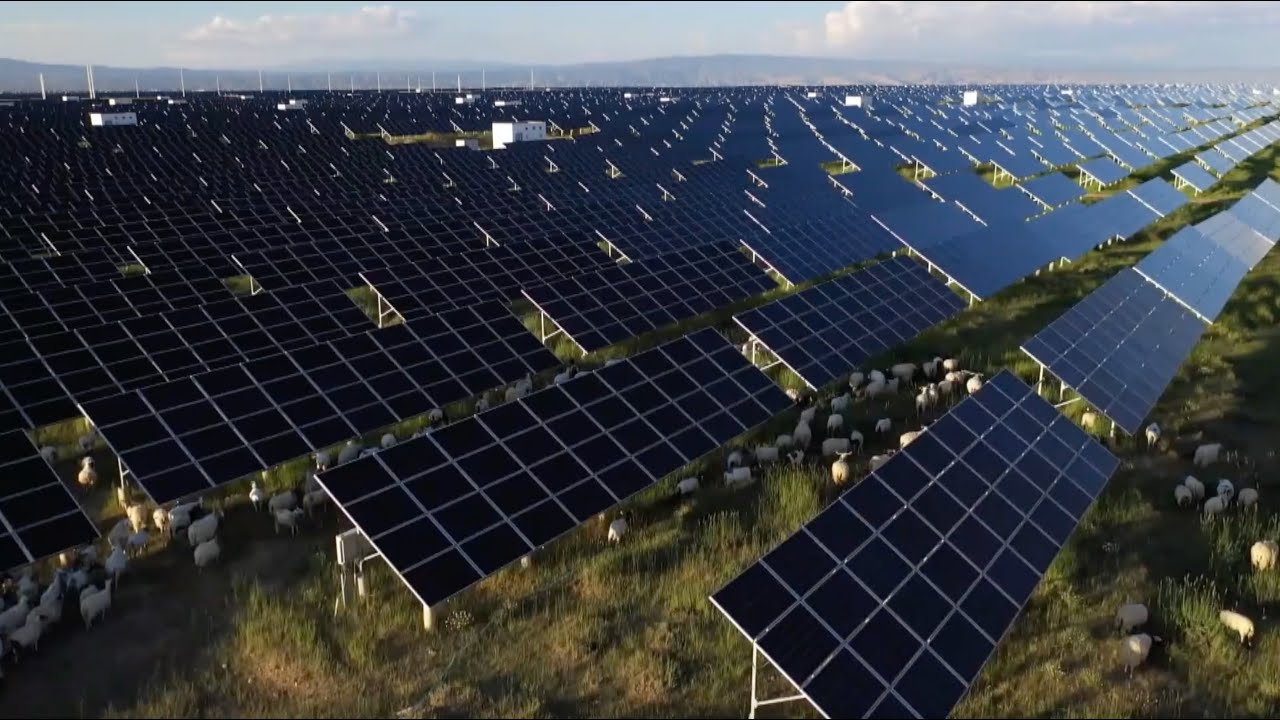
China’s domestic renewable expansion laid the groundwork. By early 2026, the country had installed over 1.5 terawatts of combined wind and solar capacity. In 2025 alone, it added roughly 315 GW of solar and 119 GW of wind. This large-scale build-out created economies of scale that drove down manufacturing costs. Solar module prices have fallen more than 80% in recent years, making the technology accessible even for countries with tight budgets.
Cost and Speed Advantages
The main appeal for developing nations lies in affordability and quick deployment. Utility-scale coal or gas plants require years of planning and large upfront capital. In contrast, solar and wind projects using Chinese equipment can often be installed in months. Chinese firms now produce about 80% of the world’s solar panels and around 60% of wind turbines. This dominance has translated into lower global prices and greater supply availability.
In Pakistan, imports of Chinese solar modules reached a cumulative 51.5 GW by November 2025, with significant volumes arriving in 2024 and 2025. Estimates suggest the country’s total installed PV capacity exceeded 27 GW by early 2026, much of it from distributed rooftop and commercial systems. These additions have helped reduce dependence on imported fuels and eased pressure on the national grid during peak demand periods. Studies indicate that the solar capacity added could avoid tens of billions of dollars in future fuel imports over the equipment’s lifetime.
Similar patterns appear elsewhere. In parts of Africa, Chinese-supplied solar panels and mini-grid systems have extended electricity to remote communities where extending the main grid would be prohibitively expensive. In Latin America, Chinese companies have participated in utility-scale solar and wind projects that complement existing hydropower resources. Under the broader framework of the Belt and Road Initiative, Chinese engagement in overseas green energy projects reached record levels in 2025, with investments and contracts supporting over 22 GW of planned wind, solar, and related capacity in partner countries that year.
Battery storage is another area where Chinese technology is gaining ground. In 2025, new overseas orders for Chinese energy storage systems totalled 366 GWh, up 144% from the previous year. Storage helps address the intermittent nature of solar and wind, making renewable-heavy systems more reliable for both off-grid and grid-connected applications.
Measurable Impacts on Energy Access
The effects are visible in daily operations. In Pakistan, solar adoption has grown rapidly among households, businesses, and agricultural users. Farmers use solar-powered tube-wells, reducing diesel costs. Small enterprises can operate longer hours without relying on expensive backup generators. In urban areas, rooftop solar has lowered daytime demand on the grid in some feeders.
Across Africa, Chinese-backed solar projects have powered schools, clinics, and small commercial hubs. Between 2010 and 2024, Chinese involvement in African renewable energy projects reached about $66 billion, with a growing share directed toward solar and wind. These efforts often include basic training for local technicians, helping build maintenance capacity over time. While large infrastructure projects still dominate headlines, smaller-scale distributed solar systems have proven especially useful for last-mile electrification.
Data from global trackers show that many emerging markets are now adding solar faster relative to their size than some advanced economies. In several African and Asian countries, solar’s share of electricity generation has risen noticeably, partly because Chinese equipment made the economics viable. Global solar PV additions hit record levels in 2025, with 511 GW installed worldwide; Chinese manufacturing supplied the majority of modules used in these projects.
Of course, challenges persist. Integrating variable renewable energy requires upgrades to transmission and distribution networks, which many developing countries are still addressing. Battery costs, though falling, remain a factor for full-scale storage solutions. Regulatory frameworks and financing mechanisms also need strengthening to ensure projects deliver long-term value without creating new debt burdens. Maintenance skills and spare-parts supply chains are improving but remain uneven.
Looking Ahead
China’s new energy sector has shifted from meeting domestic needs to becoming a major global supplier. In the first quarter of 2026, exports of lithium batteries and wind turbine components rose sharply year-on-year. This expansion benefits Chinese manufacturers facing domestic overcapacity while giving importing countries more options to tackle energy shortages.
For developing nations, the key advantage is pragmatism. Chinese equipment is not always the only choice, but its combination of price, availability, and speed has made it a frequent one where urgent capacity is needed. In Pakistan, solar imports have already reached a scale comparable to the country’s conventional grid capacity in some metrics. Other nations are watching these outcomes closely.
None of this replaces the need for sound domestic policy. Governments must still invest in grid modernisation, set clear rules for private participation, and plan for long-term system balance. Yet access to lower-cost renewable technology removes one major barrier that once made clean energy seem out of reach for poorer economies.
Energy security in the developing world will not be solved by any single country or technology. However, the rapid availability of Chinese new energy products has provided a tangible tool for reducing blackouts, cutting fuel import bills, and expanding access. As costs continue to fall and deployment experience grows, this cooperation is likely to remain an important element in how many countries manage their power sectors in the years ahead.
Author: Hadia Safeer Choudhry is an International Relations scholar with academic expertise in sustainable development, energy security, international political economy, and strategic communication. Her research and writings examine international affairs, gender discourse, and emerging global developments. She can be reached at hadisafeer74@gmail.com